

Posted by Cole & Mason UK
on August 23, 2025
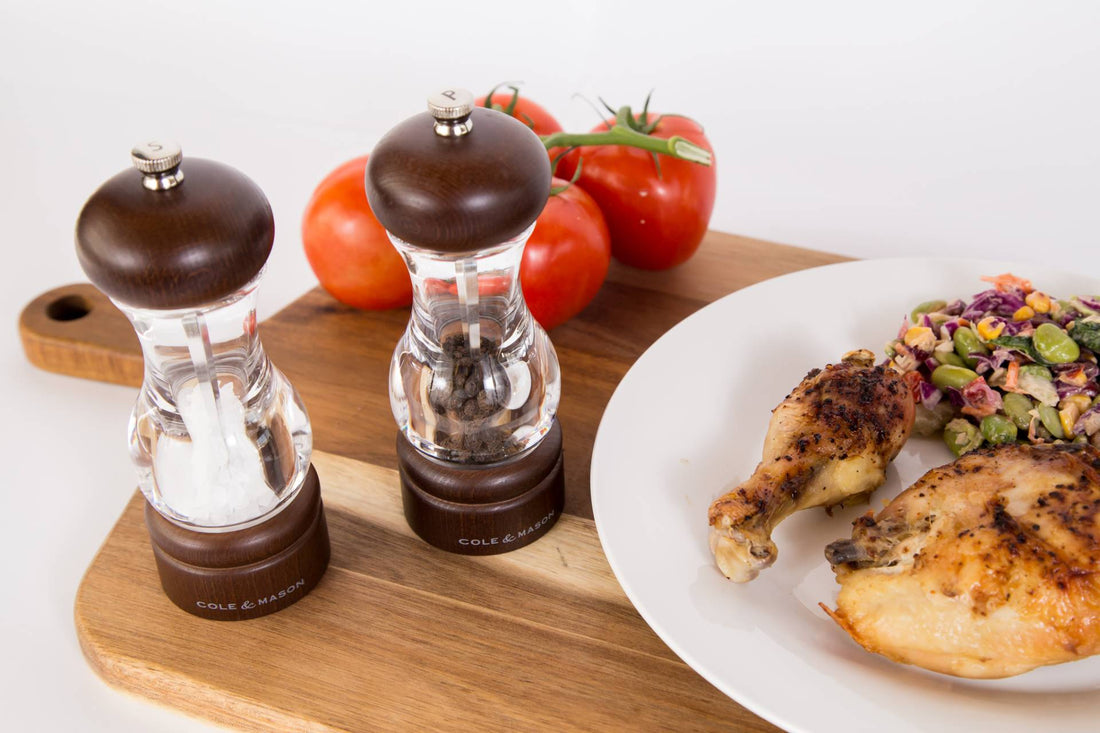
It’s a good idea to give your salt and pepper mills a clean once in a while to keep them in tip-top condition. A handy time to do this is when you need to refill your grinder. You may also need to clean your mill if you notice less seasoning is coming out - this may indicate a clog which you’ll need to remove.
How to clean a salt grinder
External: Cleaning the external body of your salt grinder is quite straightforward. The best way to clean it is to use a damp cloth. Plain water is sufficient — do not use any cleaning products such as antibacterial spray. Always dry the salt grinder thoroughly before putting it away.
Internal: To clean the inside of your salt grinder, you’ll need to follow a few more steps.
- Unscrew the top nut so you can remove the top of the salt grinder.
- Turn it upside down to remove any remaining salt granules. This is easier to see with transparent mills — if you have a wooden mill or metal salt grinder, you may need to look a little more closely.
- Then use a small brush (such as a paintbrush or pastry brush, depending on the size of your mill) to gently clean the inside of the mill. This will dislodge any small particles.
- Clean the bottom of the grinding mechanism in the same way.
- Once you are happy your salt grinder is clean, you can refill it, then replace the top and screw the nut tightly. You may need to test the grind a few times and adjust it to your preferred level, so it’s ready to go next time you cook.
How to clean a pepper mill
External: To clean a pepper mill, you need to follow the same steps for cleaning a salt grinder. A damp cloth is ideal for wiping the outside of the mill, but don’t use any cleaning sprays.
Internal: To clean the inside of your pepper grinder, you’ll need to follow a few more steps.
- Unscrew the nut on top of the mill (this is the part you use to adjust the pepper grind). Remove it so you can take the lid of the mill off, too.
- Turn the mill upside down to remove any peppercorns. If there are any lodged low down in the grinding mechanism, you can try replacing the lid and cap and then grind the mill a few times to get rid of the lodged peppercorns.
- As with cleaning a salt grinder, use a clean, dry brush to gently remove any debris and peppercorn oil. If you don’t have a paintbrush or pastry brush, you can use a soft, dry cloth.
- Clean the bottom of the grinding mechanism in the same way.
- Once your pepper mill is clean, refill it with fresh peppercorns, then replace the top and screw the nut — the tighter it is, the finer the grind. As such, you may like to adjust the grind and test it out until you have the desired level of coarseness.
Pro tip: remember that salt is only suitable for use with a mill that has a nylon or ceramic mechanism. So if you’re cleaning both your salt grinder and pepper mill at the same time, remember which is which! For most Cole & Mason mills, you can tell which is which by the colour underneath - our salt mills are white, pepper are metallic carbon steel.
Whichever salt and pepper grinders you go for, whether it’s a traditional wooden design or something a little more contemporary, just remember to keep water away from the mechanisms.
Where should I store my salt and pepper mills?
It might be tempting to store your salt and pepper mills beside or above the stove so they're in easy reach when you’re cooking. Although this may be convenient, the heat and steam from your oven and hob may cause your mills to clog up. This is especially true for salt grinders, as the salt can clump together if it gets damp. The more your seasonings clog up the mills, the more often you’ll need to clean them, and there’s a chance the grinding mechanisms could become damaged.
Try to store your herbs and spices away from the heat of the stove. You want to keep them somewhere cool and dry, away from too much moisture or direct sunlight. If storing them on a counter we highly recommend a mill tray to keep your mills tidy and avoid any damage to your counter tops.
